Every organization has a Way of Working™.
Whether it’s intentional or not, every organization develops a Way of Working™. It determines how people align, make decisions, assume ownership, escalate issues, give feedback, and ultimately execute the business. The organizations that perform most consistently don’t leave it to chance. They intentionally design it.
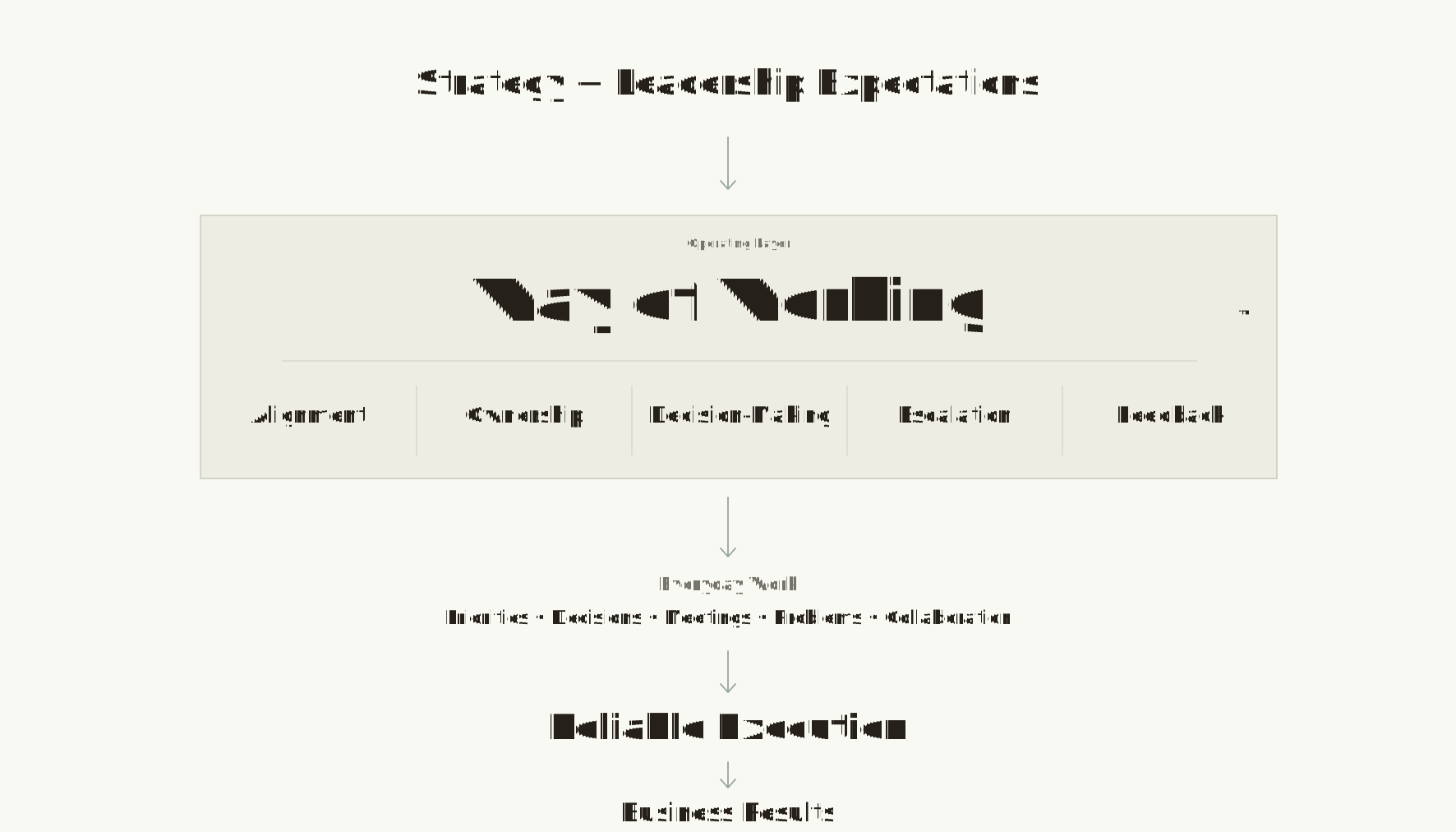
Your Way of Working™ exists whether you manage it or not.
Every organization operates through a set of unwritten patterns.
- How priorities are communicated.
- How ownership is assumed.
- How decisions get made.
- When issues are escalated.
- How feedback is given.
Those patterns become the organization’s Way of Working™.
Most organizations never intentionally create these patterns. They emerge over time through leadership habits, historical decisions, organizational growth, and individual preferences.
The result is often inconsistency.
- Different leaders manage differently.
- Different teams solve the same problems differently.
- People succeed because of individual capability rather than organizational consistency.
Eventually, execution becomes unpredictable.
Not because strategy is unclear.
Because the Way of Working™ is.
Execution is shaped long before work begins.
Organizations often attribute inconsistent performance to communication, leadership, engagement, accountability, or culture.
While each of those influences execution, they are rarely the root cause. The root cause is often a Way of Working™ that has never been intentionally designed.
When people operate from different assumptions, execution naturally becomes inconsistent. When they operate from shared expectations, performance becomes far more predictable.
Alignment
People understand what matters most and how priorities connect across the organization.
Clarity
Teams know how decisions are made, when to escalate, and what ownership looks like.
Consistency
Leaders reinforce the same expectations across functions, locations, and teams.
Performance
Better execution becomes the natural outcome of a better operating system.
A Way of Working™ is not the same as culture.
Culture describes how an organization feels. A Way of Working™ determines how an organization operates.
Culture is influenced by values, beliefs, traditions, and shared experiences. A Way of Working™ defines the practical behaviors that shape execution every day.
Organizations don’t improve execution by trying to change culture first. They improve execution by creating a more consistent Way of Working™. Culture follows.
Every interaction reinforces your Way of Working™.
Leadership
Behaviors
Habits
Consistency
Performance
A Way of Working™ is built one interaction at a time.
- A decision.
- A conversation.
- A coaching moment.
- A missed escalation.
- A leadership meeting.
- A performance discussion.
Repeated thousands of times, these moments become operating habits. Those habits become organizational expectations. Those expectations become the organization’s Way of Working™.
Without intentional reinforcement, every leader creates a slightly different version. With an intentional system, everyone strengthens the same one.
Growth often creates inconsistency.
As organizations grow, leaders naturally develop different management styles. Teams adopt their own ways of communicating. Decision-making becomes inconsistent. Ownership varies. Escalation becomes unpredictable.
New employees learn from individual managers instead of a common operating system. Over time, every department develops its own Way of Working™.
Leaders then spend enormous effort trying to reconnect what slowly drifted apart.
High-performing organizations intentionally design how work happens.
Define
Establish one shared Way of Working™ that leaders understand and model consistently.
Reinforce
Embed expectations into everyday work through leadership, AI, operating rhythms, and real business challenges.
Improve
Continuously measure consistency, identify opportunities, and strengthen execution over time.
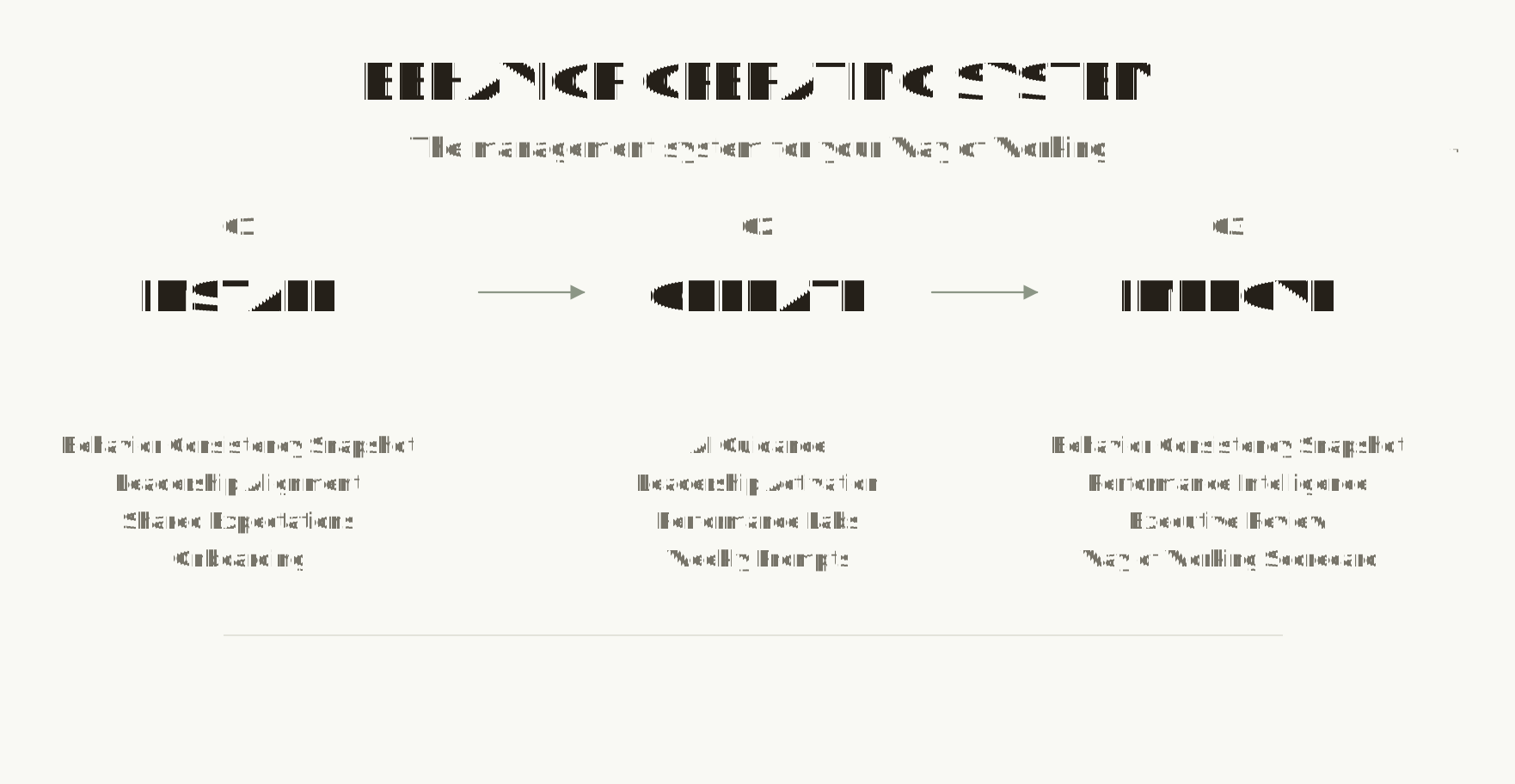
Every Way of Working™ needs a management system.
Organizations invest in systems to manage customers, finance, operations, projects, and technology. Very few invest in a system that intentionally manages how people work together. That is the role of the Behavior Operating System.
It creates shared operating expectations, reinforces them continuously, and provides leaders with visibility into how consistently the organization is executing. The result is a Way of Working™ that becomes stronger over time instead of more fragmented.
Consider your own organization.
If you asked ten leaders how ownership should work…
Would they answer the same way?
If you asked five teams when issues should be escalated…
Would they describe the same process?
If new leaders joined tomorrow…
Would they inherit one consistent Way of Working™, or five different versions?
The answers to those questions shape execution every day.
Your organization already has a Way of Working™.
The question isn’t whether it exists. The question is whether it’s helping your organization perform at its full potential.
Discover how the Behavior Operating System helps organizations intentionally design, operate, and continuously improve a Way of Working™ that creates more consistent execution.